B2B SaaS
This case study reflects real work for a high-security client. Some details are omitted to protect confidentiality and honor NDAs. The challenges, solutions, and outcomes are authentic. If you would like more information or a private walkthrough, I would be more than happy to show you. Please feel free to contact me.

Background & Challenge
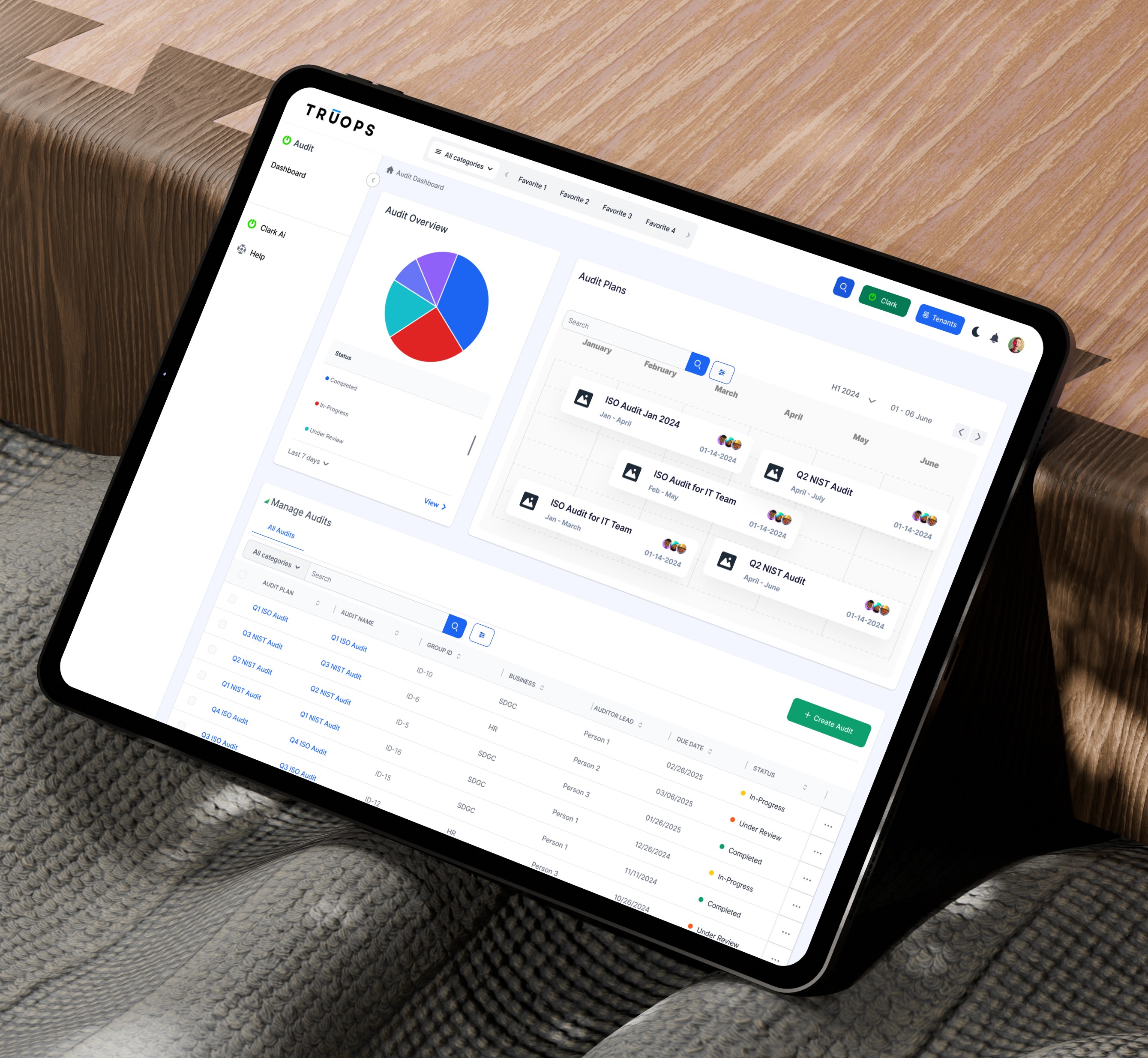
Fortress Information Security’s Asset to Vendor (A2V) platform serves as a critical nexus for vendors to access and manage cybersecurity information pertinent to their clients, particularly within sectors like energy and defense.
The existing platform faced challenges in balancing stringent security requirements with user accessibility. Vendors needed a secure yet intuitive interface to navigate sensitive information without compromising on functionality or compliance.
Key challenges included:
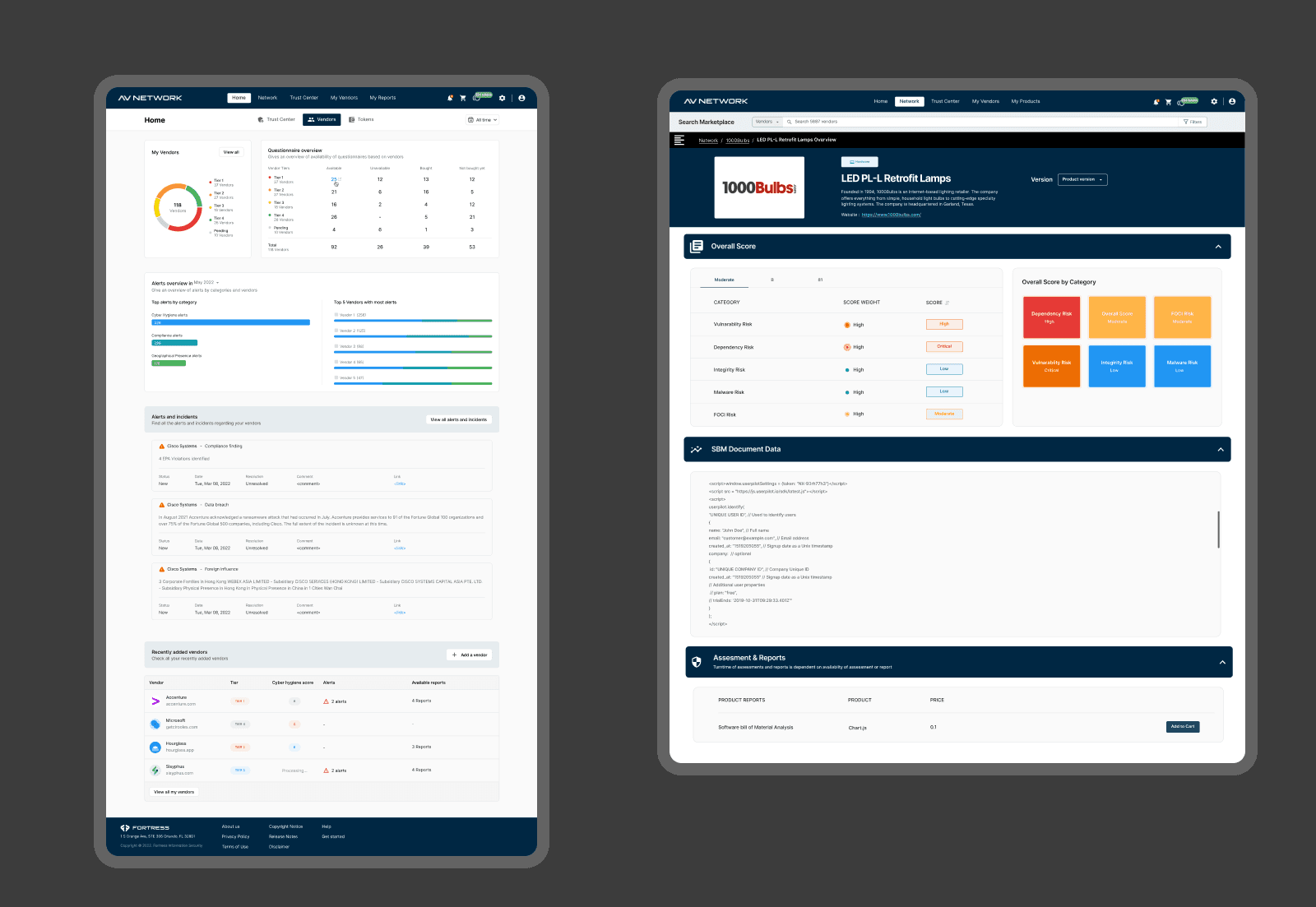
A fragmented, unintuitive interface that made critical workflows cumbersome for vendors.
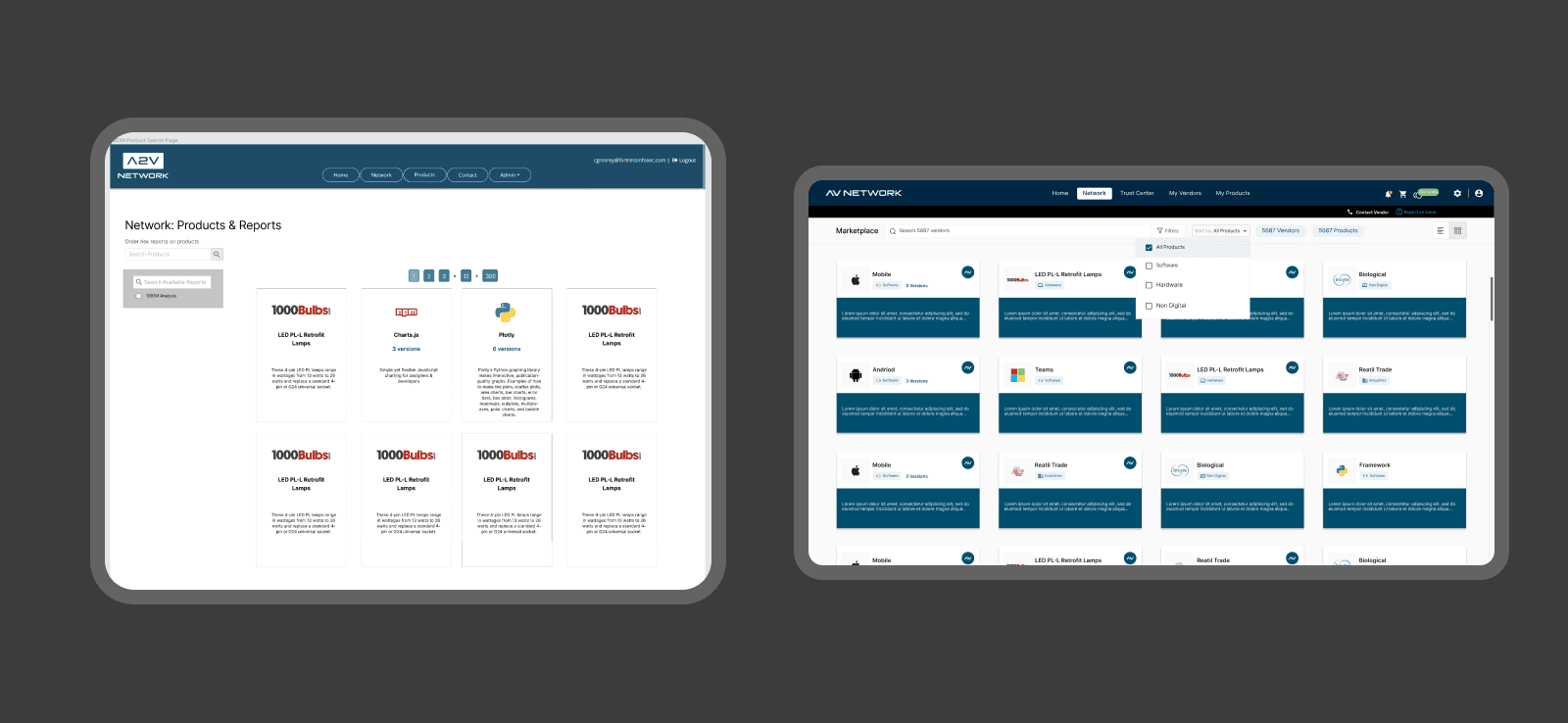
Inconsistent UI patterns and disjointed navigation, leading to user frustration and inefficiency.
Difficulty accessing sensitive documentation securely without creating friction.
An outdated design lacking scalability for evolving security and compliance needs.
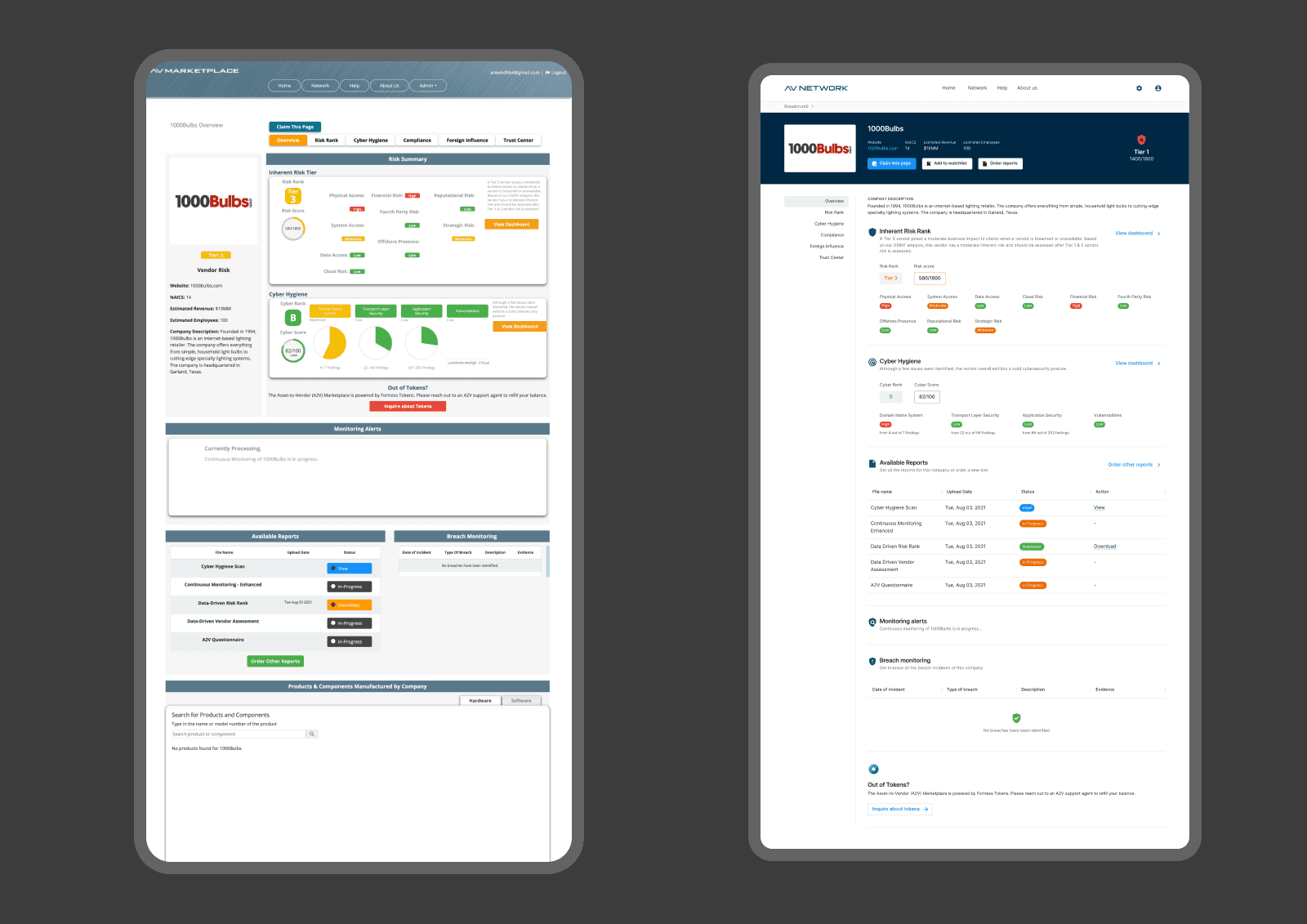
I was tasked to lead the end-to-end redesign of the A2V platform, focusing on streamlining user experience, developing a scalable design system, and enhancing security protocols without compromising usability.
Solution
As Lead Designer, I defined the overall UX strategy, shaped the design system vision, and ensured all solutions were both user-centered and compliant. I led and mentored a team of five designers, driving a high-impact redesign that simplified complexity and delivered measurable value.
We collaborated closely with internal stakeholders, product managers, and engineering to understand the nuanced requirements of both the vendors and the security protocols in place.
Our approach involved:
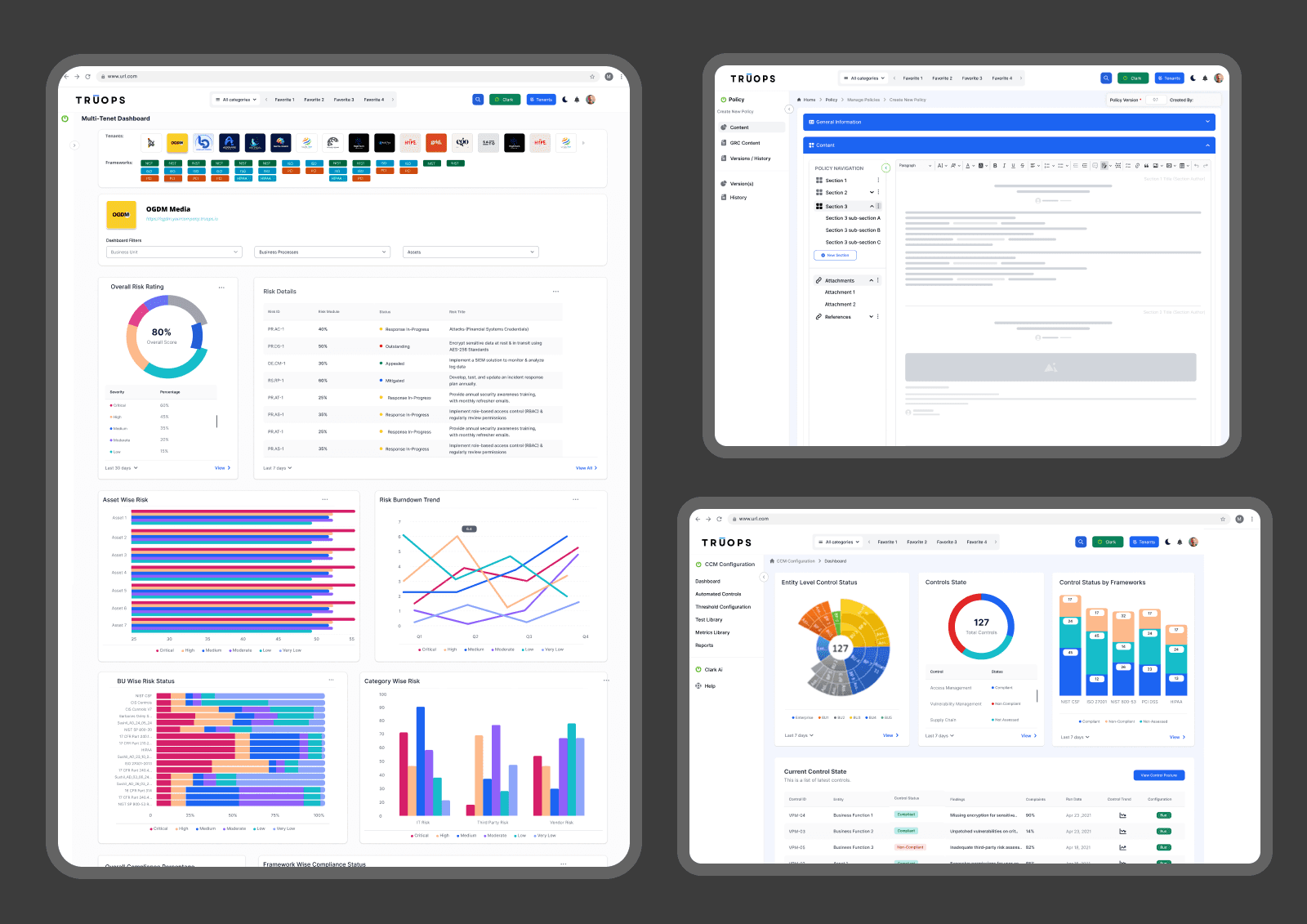
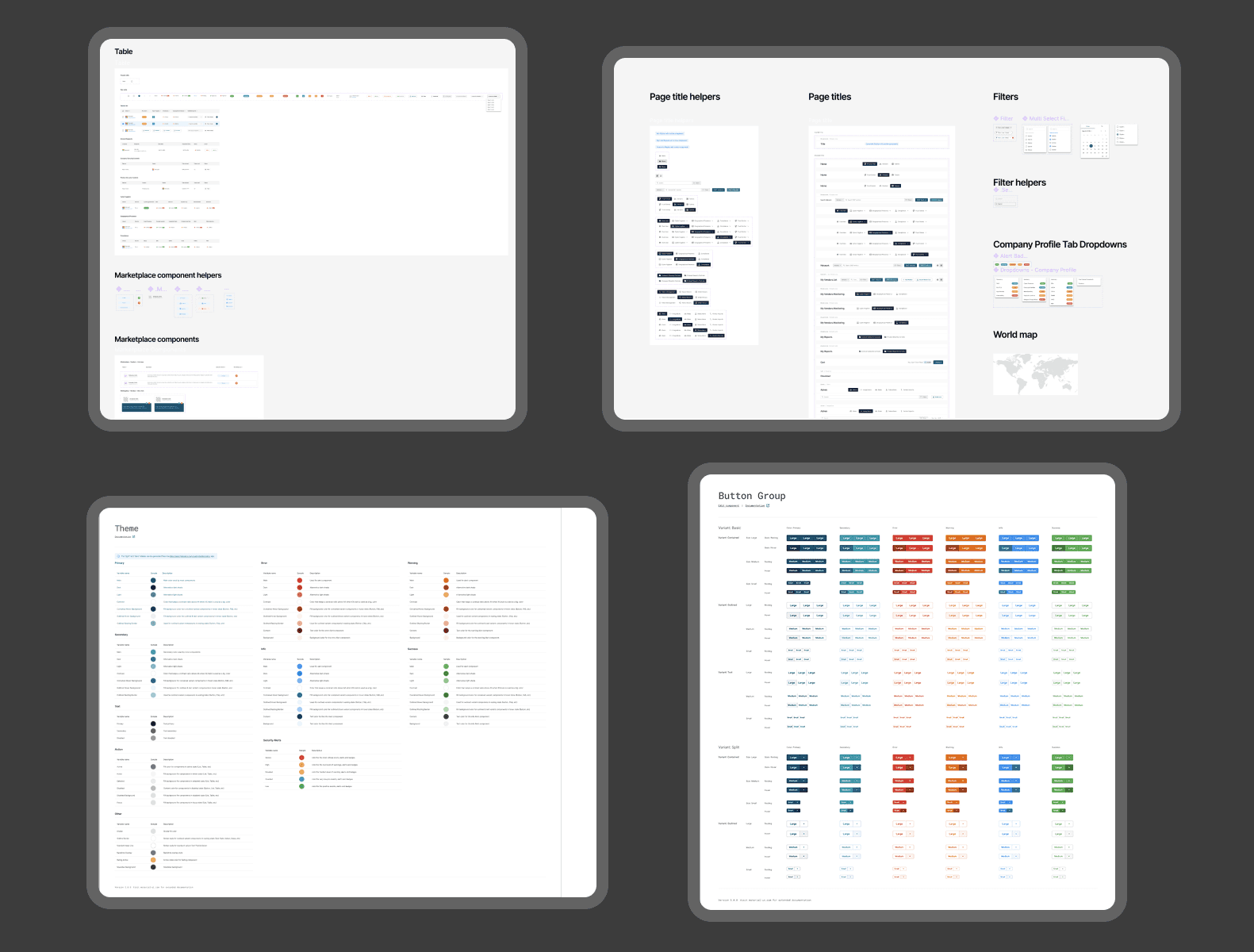
Design System Development: Crafting a cohesive and accessible design language that ensured consistency across the platform while facilitating ease of use for vendors.
Process Flow Optimization: Reimagined key vendor workflows to reduce complexity and enhance efficiency, enabling users to find and manage sensitive cybersecurity data with minimal friction.
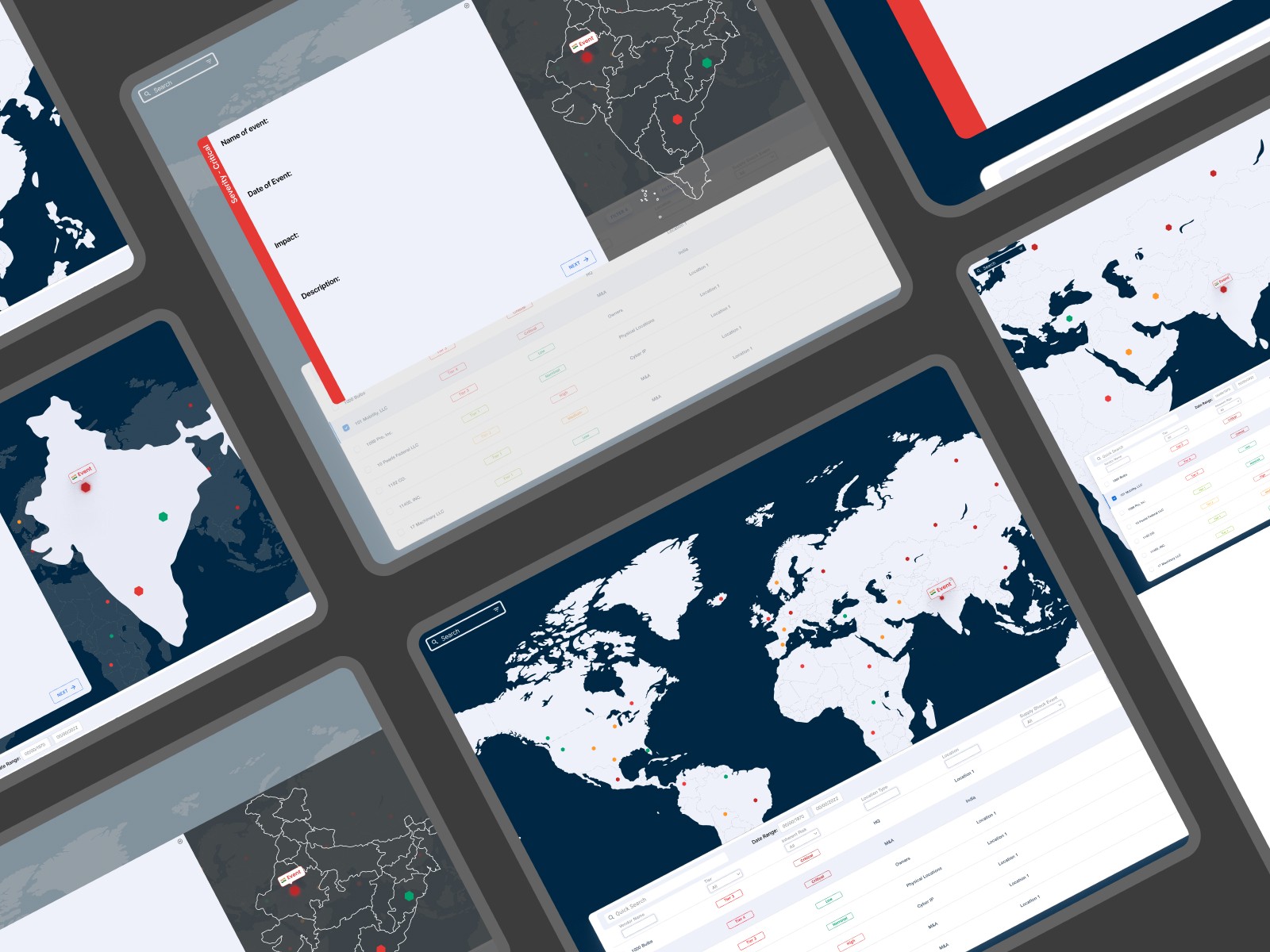
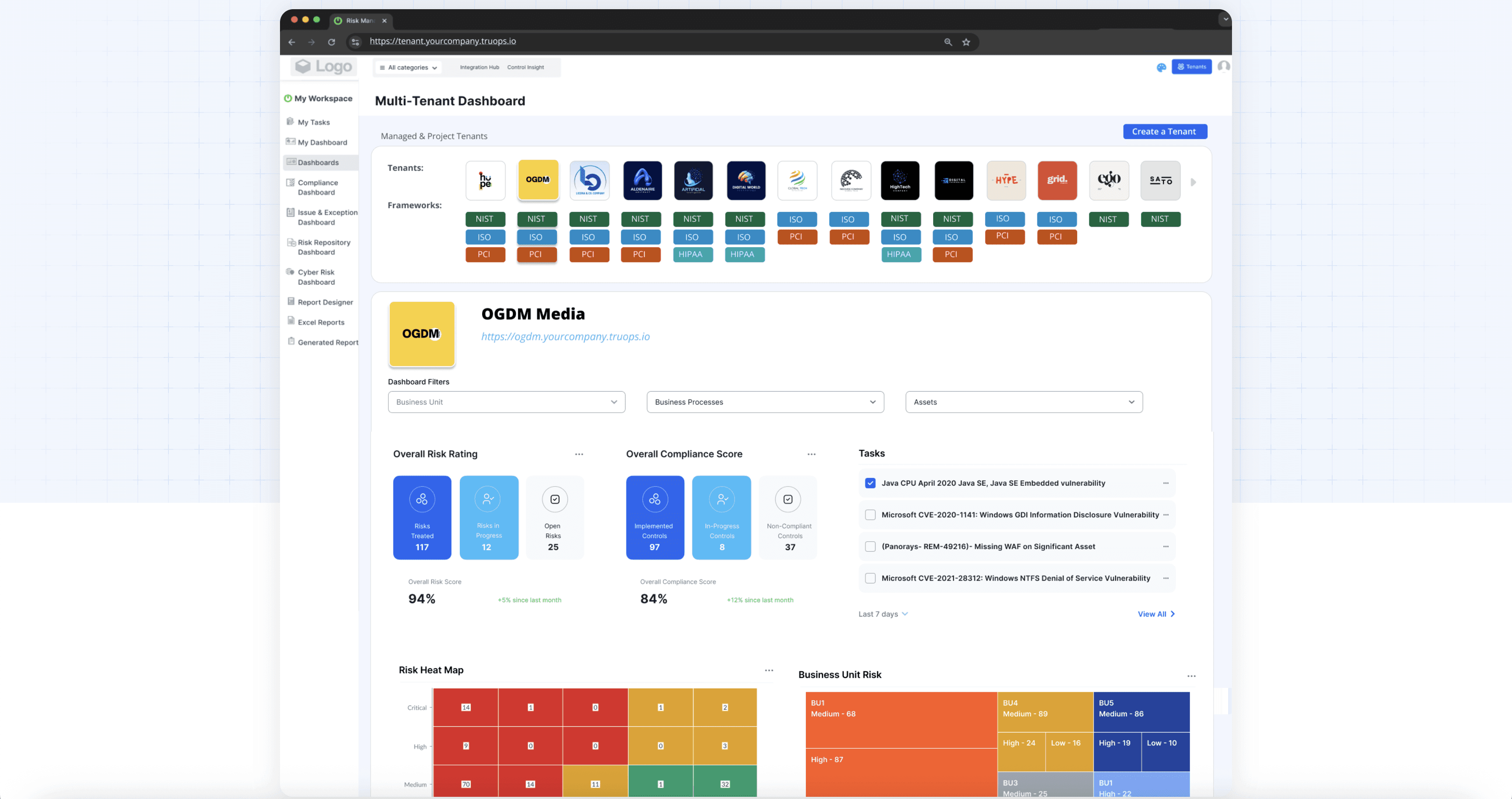
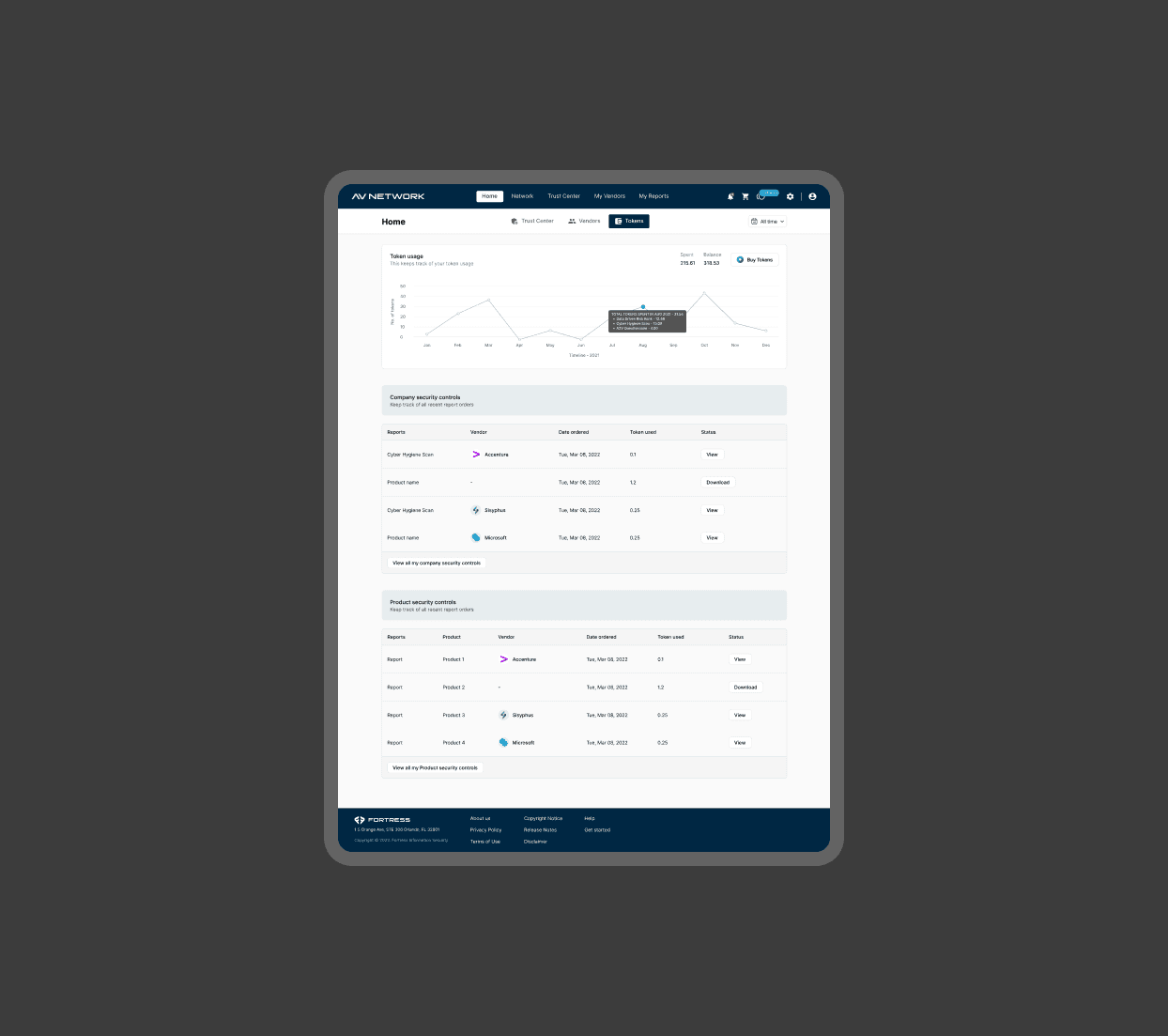
Feature Integration: Incorporating functionalities such as customizable dashboards, real-time notifications and secure document management tools, balancing usability with compliance to enhance user engagement and responsiveness.
To maintain data integrity and security, we implemented robust measures including multi-factor authentication, encrypted data storage, and rigorous access controls. Comprehensive testing protocols were established to identify and mitigate potential vulnerabilities, ensuring the platform’s resilience against cyber threats.
57%
25%
34%
Process
The redesign of the A2V platform followed a structured UX process tailored to meet the needs of a high-security enterprise environment. As Lead Designer, I guided my team through each phase, from discovery to delivery, ensuring alignment with business goals and strict security standards.
Discovery & Research
Conducted stakeholder interviews, platform audits, and vendor feedback analysis to uncover user pain points
Focused on understanding workflows while protecting sensitive data
Key insights highlighted friction in navigation, inconsistent UI patterns, and difficulty locating vendor-client documentation
Ideation & Design Strategy
Defined design goals around clarity, accessibility, and regulatory compliance
Established guiding design principles for consistency and scalability
Introduced:
Modular dashboard layouts for personalized user views
Streamlined navigation paths to surface key information faster
A flexible component library to unify UI/UX across all features
Design System Development
Built a brand-new design system with standardized typography, color, icons, and reusable components
Ensured the system was accessible and scalable for both designers and developers
Prototyping & Validation
Created interactive prototypes for internal reviews and NDA-protected vendor testing
Used feedback from walkthroughs to validate flows and refine usability
Prioritized iteration based on real user behavior
Handoff & Support
Delivered finalized designs and documentation to engineering in structured phases
Provided ongoing QA and design support during implementation
Led cross-functional syncs to maintain alignment on the UX/UI fidelity
Results
The redesigned A2V platform successfully bridged the gap between stringent security requirements and user-friendly design. Internal stakeholders reported improved vendor satisfaction due to the platform’s intuitive interface and enhanced functionalities.
Key outcomes included:
Increased Vendor Efficiency & Satisfaction: Streamlined workflows reduced time on task by 40%, while platform engagement metrics showed a 28% increase in vendor portal activity post-launch.
Reduced Support Overhead: Improved task flows and clearer UI patterns led to a 30% decrease in vendor support tickets related to navigation, access issues, and document management.
Enhanced Security & Compliance Alignment: Advanced security measures—including multi-factor authentication and granular access controls—bolstered the platform’s security posture, achieving full alignment with updated NERC CIP and CMMC guidelines.
Scalable Design System for Future Growth: The new modular design system empowered internal teams to accelerate feature rollouts by 25%, ensuring the platform can rapidly adapt to evolving vendor and regulatory needs.
Positive Stakeholder & Vendor Feedback: Both internal teams and external vendors praised the platform for its balance of usability and scaleability, reinforcing Fortress’s reputation as a trusted cybersecurity leader in critical infrastructure sectors.
The A2V platform redesign not only delivered a vastly improved user experience for vendors but also strengthened Fortress’s position as a cybersecurity innovator—proving that usability and uncompromising security can coexist to drive efficiency, trust, and long-term value for critical infrastructure sectors.